gin是一个知名的HTTP web框架,应用非常广泛。是用golang开发的。github项目地址为 https://github.com/gin-gonic/gin
go-gin-example阅读 因为要阅读gin的源代码,所以想着先阅读完教如何 使用gin的示例代码,先大概了解gin是如何使用的。示例项目是https://github.com/eddycjy/go-gin-example。下面是我阅读完示例代码后的总结的一些比较重要的部分,当自己编码时可以参考。
读取配置和数据库初始化的过程,可以放在func init() 里,参考:
1
2
3
4
5
6
7
func init ()
项目里使用到了https://github.com/beego/beego框架,用了其validation包做数据验证,其他的包没有使用。
beego框架可以用于开发包括传统的 Web 网站、API 服务、后台管理系统
validation包的使用方法可以参考:
1
2
3
4
5
6
type auth struct {string `valid:"Required; MaxSize(50)"` string `valid:"Required; MaxSize(50)"`
用到了https://github.com/unknwon/com包,这个是针对 Go 编程语言常用函数的开源项目。
router目录存放了rest api的路由定义和rest api的rest部分,而且router的目录结构和路由的结构也是一样的
1
2
3
4
5
6
7
8
.
PS:除了这个项目,gin还提供了官方的example的项目,https://github.com/gin-gonic/examples,里面列举了一些gin的用法
gin源代码阅读 因为对于gin的调用通常是类似这样写的:
1
2
3
4
5
6
7
8
9
10
11
12
13
14
15
16
17
18
19
20
21
22
23
24
25
26
27
28
29
30
31
32
33
func main () ":%d" , setting.ServerSetting.HttpPort)1 << 20 "[info] start http server listening %s" , endPoint)func InitRouter () "/api/v1" )"/tags" , v1.GetTags)"/articles/poster/generate" , v1.GenerateArticlePoster)return r
全局搜寻gin项目的代码,没有main.go文件,也没有main入口,所以gin代码只有被调用时才生效。根据上面的InitRouter函数中的代码,可以发现,其实:
可以理解为通常的入口文件。
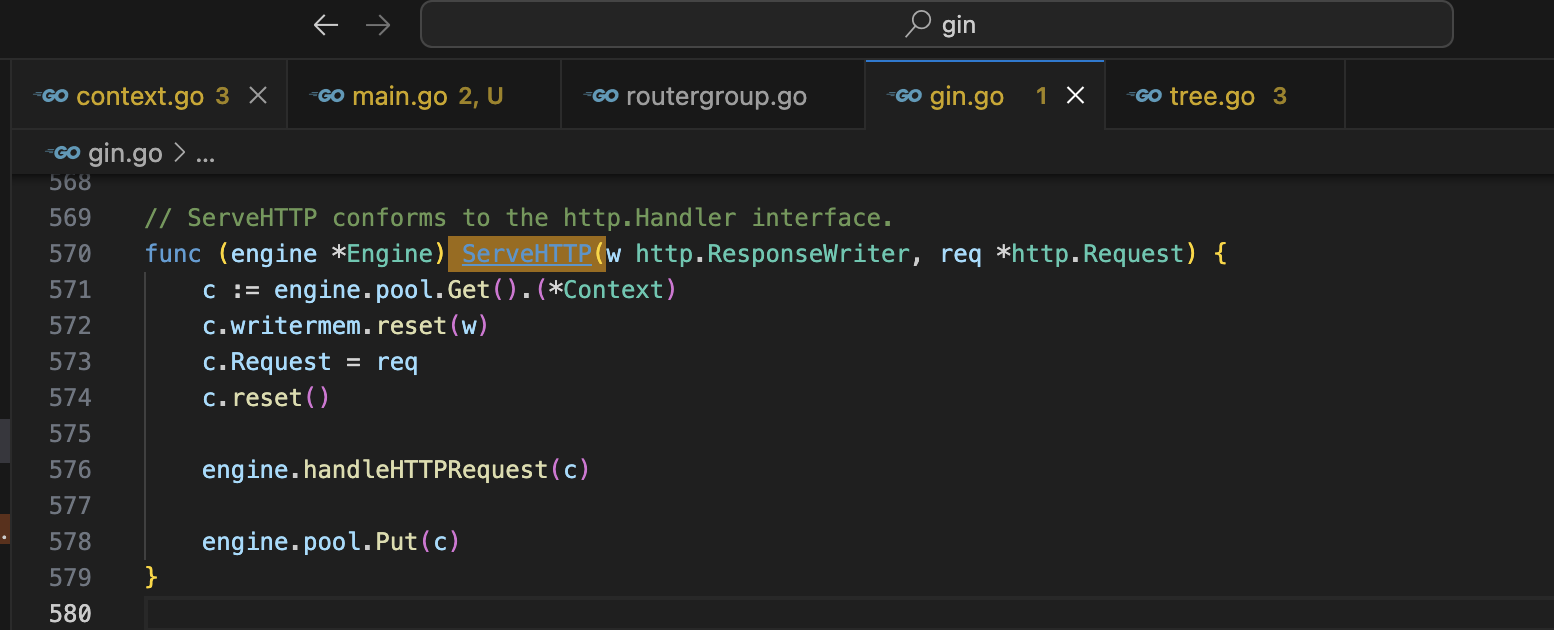
返回的Engine实现了http的ServeHTTP方法
1 2 3 type Handler interface {
具体的实现代码为:
这里是gin框架与外界调用之间的“对接点”。一个web框架的阅读,可以通过以下几个部分来阅读,
路由分组
输入数据解析与验证(比如json验证)
中间件支持
输出渲染
错误处理
日志
这几个部分也是一个请求的前后经过的几个步骤,首先在程序运行前定义好路由,然后运行。一个请求到达时,首先解析输入数据,然后经过中间件的处理,经过用户自定义的处理函数,最后渲染并返回输出。在这串运行过程中,可能会出错,那么就需要错误处理,也可能需要记录日志。
下面根据这几个部分来介绍。
路由分组 gin的路径匹配部分使用的是基数树(Radix Trie)数据结构,这是一种多叉树,是一种更节省空间的Trie(前缀树)。也就是努力将多个节点合并为一个。基数树中作为唯一子结点的每个结点都与其父结点合并,每个内部结点的子结点数最多为基数树的基数 r,r 为正整数且等于2^n(n>=1)。参考文章
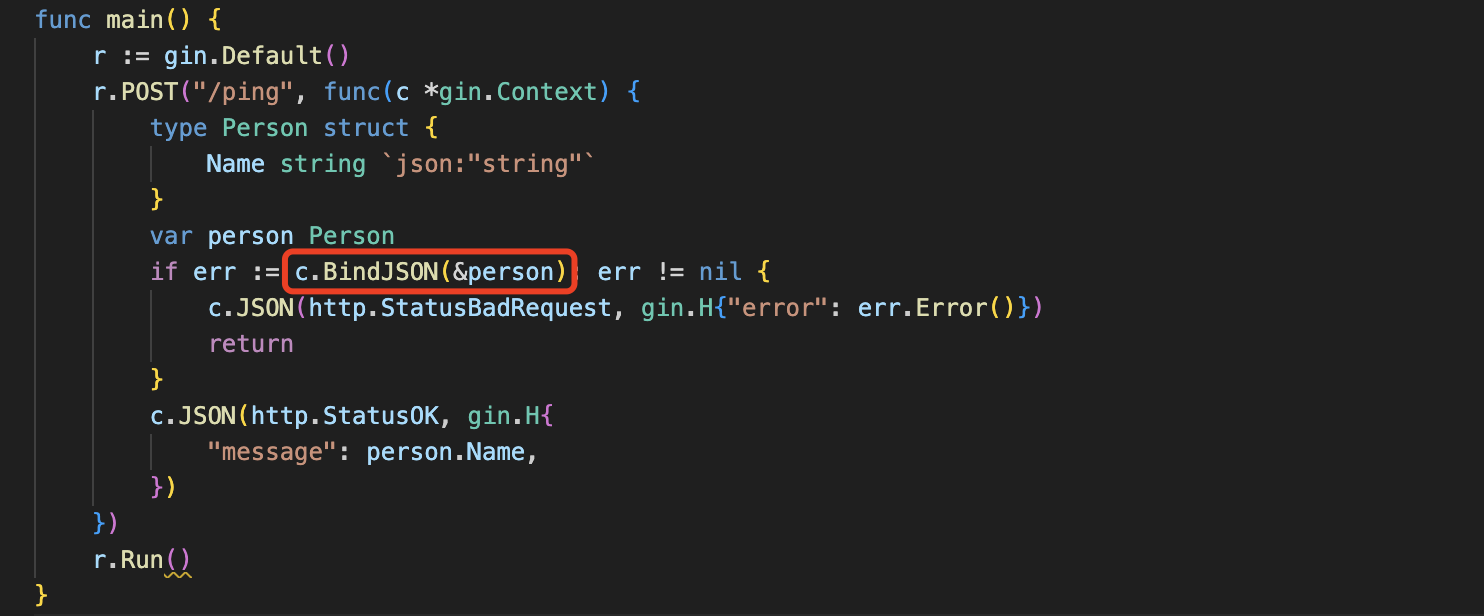
输入数据解析与验证 以这个例子为例
这个例子中,BindJSON就是把http请求的json格式的内容解析成golang中的名为Person的struct。
本小节就是介绍类似BindJSON这样的功能gin是如何实现的,这里除了BindJSON,也可以写BindXML等等,BindXML会在当请求被容为xml格式时会把请求内容解析出来。
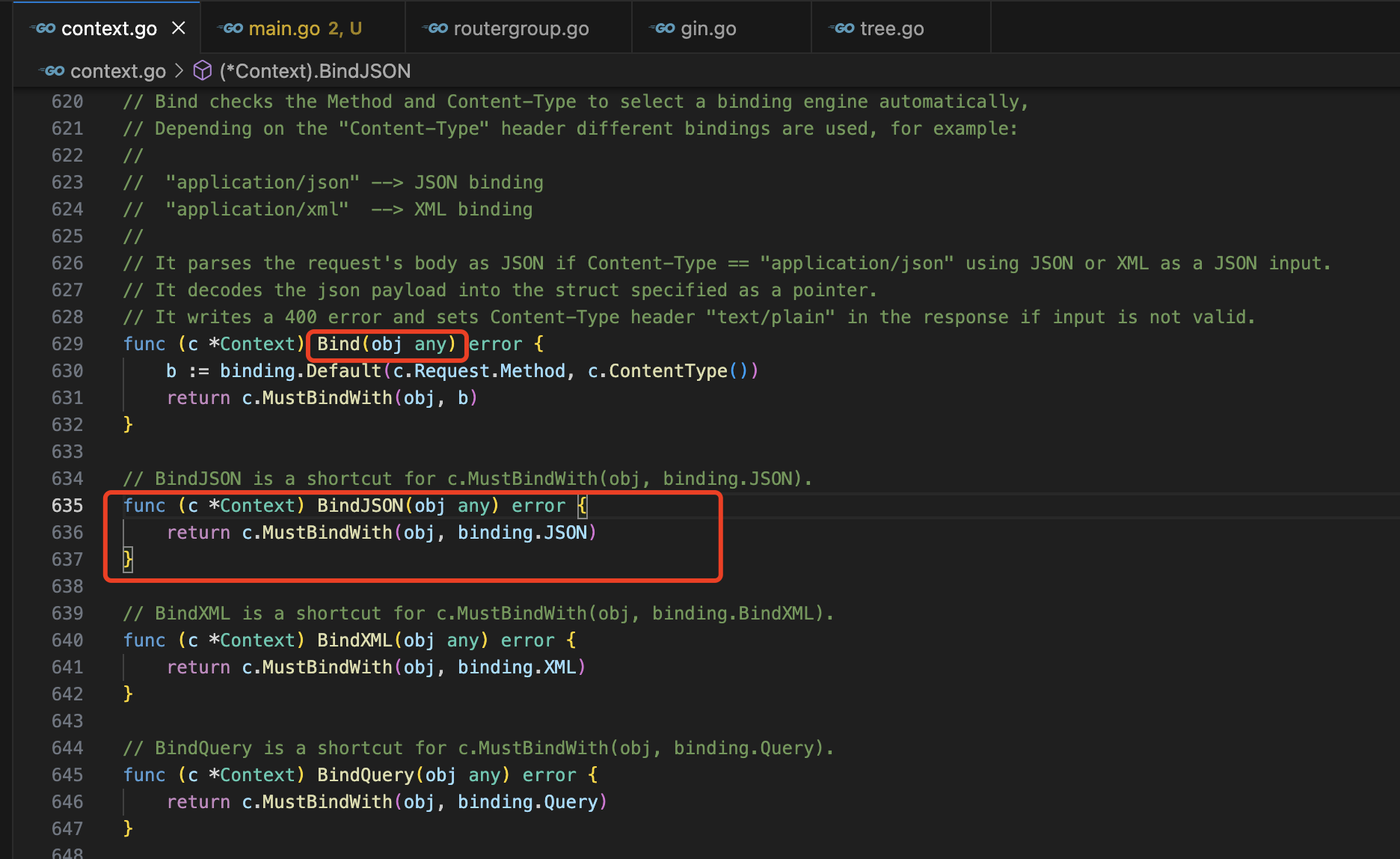
BindJSON定义在源代码中的context.go中:
所有和请求解析的函数都在该context.go中定义了,都是Context的方法,从func (c *Context) Bind(obj any) error到func (c *Context) ShouldBindWith(obj any, b binding.Binding) error 。这里需要注意下第一个func (c *Context) Bind(obj any) error ,这是比较特殊和实用的,因为这个函数会根据http请求的content-type自动找到不同content-type对应的输入解析函数。
在开始介绍其他的Bind相关函数之前,先介绍下基本且实用的func (c *Context) Bind(obj any) error。
Bind函数实现 如上图可以看到Bind函数的实现。
1 2 3 4 func (c *Context) error {return c.MustBindWith(obj, b)
首先是binding.Default(c.Request.Method, c.ContentType())第一个参数是c.Request.Method, c.Request.Method,c.Request为*http.Request类型,这里直接获取到了Method,没有任何多余的实现,而第二个 c.ContentType()是介绍如何获取请求的content-type的,其实现为:
1 2 3 4 5 func (c *Context) string {return filterFlags(c.requestHeader("Content-Type" ))
1 2 3 4 5 6 7 8 9 10 11 12 13 func filterFlags (content string ) string {for i, char := range content {if char == ' ' || char == ';' {return content[:i]return contentfunc (c *Context) string ) string {return c.Request.Header.Get(key)
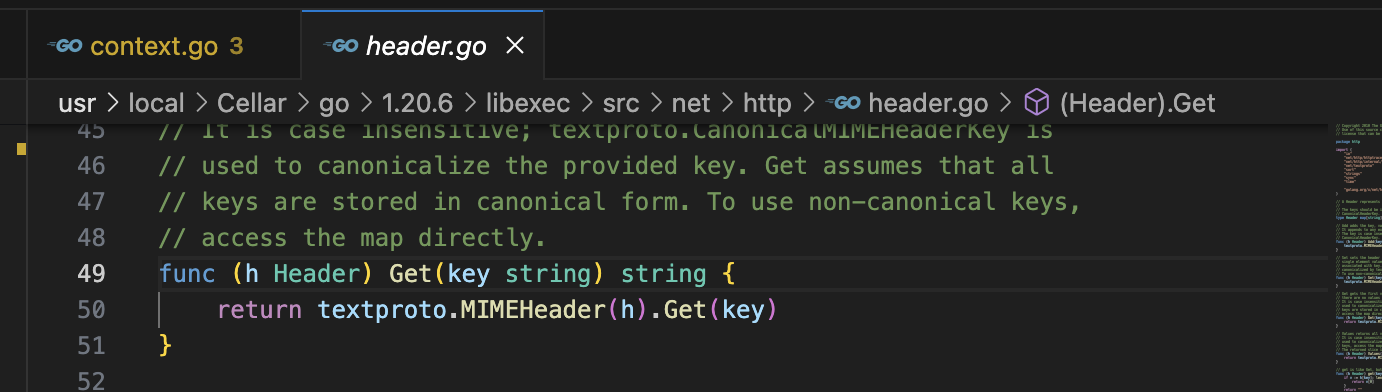
可以看到实现的逻辑较为简单,最重要的还是调用了go标准库的net包中的func (h Header) Get(key string) string这个函数,才获取到了请求的content-type。
获取到了 binding.Default的两个参数后,下面是binding.Default的实现,这个函数的都是都是在binding包中的:
1 2 3 4 5 6 7 8 9 10 11 12 13 14 15 16 17 18 19 20 21 22 23 24 25 26 27 28 29 30 type Binding interface {string error func Default (method, contentType string ) if method == http.MethodGet {return Formswitch contentType {case MIMEJSON:return JSONcase MIMEXML, MIMEXML2:return XMLcase MIMEPROTOBUF:return ProtoBufcase MIMEMSGPACK, MIMEMSGPACK2:return MsgPackcase MIMEYAML:return YAMLcase MIMETOML:return TOMLcase MIMEMultipartPOSTForm:return FormMultipartdefault : return Form
可以看到实现也很简单,就是根据string类型的输入即content-type,返回不同类型如JSON、XML等对Binding的实现。比如Form对Binding interface的实现为:
1 2 3 4 5 6 7 8 9 10 11 12 13 14 15 16 17 var (
1 2 3 4 5 6 7 8 9 10 11 12 13 14 15 16 17 18 19 20 21 22 23 type formBinding struct {}type formPostBinding struct {}type formMultipartBinding struct {}func (formBinding) string {return "form" func (formBinding) error {if err := req.ParseForm(); err != nil {return errif err := req.ParseMultipartForm(defaultMemory); err != nil && !errors.Is(err, http.ErrNotMultipart) {return errif err := mapForm(obj, req.Form); err != nil {return errreturn validate(obj)
这里还需要注意mapForm的实现,mapForm的作用在http的form格式的请求已经被成功解析到req.Form后,将req.Form解析到目标对象obj中 。那么mapForm是如何实现的呢?
1
2
3
4
5
6
7
8
9
10
11
12
13
14
15
16
17
18
19
20
21
22
23
func mapForm (ptr any, form map [string ][]string ) error {return mapFormByTag(ptr, form, "form" )func mapFormByTag (ptr any, form map [string ][]string , tag string ) error {var pointed anyif ptrVal.Kind() == reflect.Ptr {if ptrVal.Kind() == reflect.Map &&if pointed != nil {return setFormMap(ptr, form)return mappingByPtr(ptr, formSource(form), tag)
下面涉及setFormMap和mappingByPtr的代码都比较底层,这里就不贴出来了,主要作用就是根据反射给ptr赋值。
至此第一行执行完毕,下面就是执行 return c.MustBindWith(obj, b)
这个小节讲的是Bind的实现,最后执行的语句是 c.MustBindWith(obj, b),其实binding.go中和Bind函数同级别的其他函数比如func (c *Context) BindJSON(obj any) error ,func (c *Context) BindXML(obj any) error 等等,都用到了c.MustBindWith这个函数,所以下面将c.MustBindWith单独介绍。
1
2
3
4
5
6
7
func (c *Context) error {if err := c.ShouldBindWith(obj, b); err != nil {return errreturn nil
MustBindWith本质上还是在调用ShouldBindWith,下面介绍ShouldBindWith的实现,
ShouldBindWith的实现 1 2 3 4 5 6 func (c *Context) error {return b.Bind(c.Request, obj)
ShouldBindWith接受两个参数,第一个是要绑定的对象,为any即interface类型,第二个是绑定的实现方法,是一个interface,由json、xml等实现。
b.Bind(c.Request, obj)就是调用binding.Binding类型的b实现的interface。这里超级简单。
中间件支持 输出渲染 错误处理 日志 gin阅读中的一些扩展 下面是阅读中的一些知识点的总结,这些知识点和gin的框架实现关系不大,都是一些比较独立的知识点。
gin源代码中很多地方都写了go:build,关于这个go:build,其实 go:build 是一个编译指令(build constraint),用于在不同的Go版本或操作系统之间条件编译代码。!go1.20表示如果Go版本小于1.20,那么以下代码块将会被编译,否则将被忽略。go1.20 表示如果Go版本等于1.20或更高,那么以下代码块将会被编译,否则将被忽略。
golang有个类型是any,是原生的,其作用和interface相同,其实是interface的别名
参考文章 基数树简介